

You didn’t search for yoga for emotional release because you needed a better stretch. You searched because something in you is carrying too much, and the usual advice feels unreliable. One person says “just breathe.” Another says “push through.” Another says “let it all out.” When answers clash, confusion grows, and shame follows: Why can’t we figure this out?
Yoga For Emotional Release is not proof something is wrong with you, but a sign your body and inner life have been carrying too much alone.
Yoga For Emotional Release is not proof something is wrong with you, but a sign your body and inner life have been carrying too much alone.
By the end of this page, you’ll know exactly what to do tonight so the pressure in your body can soften instead of getting pushed back down.
Nothing is wrong with you.
Your system is not resisting healing. It is protecting you in the only way it learned: hold it in, stay functional, keep moving. That works for survival. It fails for relief.
So here is the truth this page is built on: your emotions are not the problem. Being left alone with them is.
When safety leads, yoga becomes a way to meet what is real. Not perform calm. Not force catharsis. Meet what is real, in your body, with steps you can trust tonight.
If you want the wider emotional map first, read our Permission to Feel guide and come back here for the yoga-specific practice.
Why yoga for emotional release works only when safety comes first
Join our insider list
Get exclusive insights delivered to your inbox — plus a free guide when it drops.

Most of us were trained out of feeling long before we ever stepped on a mat. Keep it together. Be easy to be around. Don’t make a scene. The body adapts: throat tightens, jaw locks, breath gets shallow, shoulders stay braced.
Then we bring that same pattern into yoga.
We push a pose to “break through.”
We force breath to “release faster.”
We wait for a dramatic cry to prove it worked.
When that moment doesn’t come, we assume failure. What actually happened is simpler: the body did not yet feel safe enough to open.
In our experience, yoga for emotional release starts working the day you stop trying to extract emotion and start offering it safe contact. Release is not a performance target. It is a nervous-system decision.
A lot of “blocked emotion” is guarded emotion. That guarding is intelligence, not defect. If tears once brought punishment, or anger once cost connection, your body learned to hide those states to protect belonging. Respect that. Don’t fight it.
Keep these two anchors close:
You do not need stronger control. You need safer contact.
Every feeling you were taught to hide is waiting for witness, not judgment.
And one point that lowers pressure immediately: emotional release is often quiet. A fuller exhale. A softer jaw. Less pressure behind the sternum at bedtime. Fewer mental loops. Subtle does not mean weak. Subtle is where trust begins.
If this hits home, our guides on why you say “I’m fine” when you’re not and how to stop hiding your feelings deepen the same work from another angle.
If yoga for emotional release feels heavy right now, you can use a guided support tool between sessions.
Feeling.app.
Emotional suppression effects, in plain body language

Suppression usually isn’t lying. It’s automatic editing.
Tears rise, you swallow.
Anger appears, you rename it “stress.”
Grief comes, you clean the kitchen, answer messages, stay useful.
Over time, this can look like personality: “I’m just not emotional.”
Inside, it often feels like living a few inches away from your own life.
The body keeps score in specific places:
Throat: words held back to keep peace.
Chest: weight nobody asks about.
Stomach: dread before hard conversations.
Shoulders: everyone else’s needs, carried as your own.
Jaw: anger bitten down.
Hands: helplessness with nowhere to go.
Research continues to support what people feel directly: chronic stress and unresolved emotional load affect sleep, mood, immunity, and physical tension (APA on stress and the body, CDC stress overview).
This matters for men and emotions too. Many men were rewarded early for suppressing sadness and fear. On the outside: “steady.” On the inside: disconnected, irritable, exhausted. Reversing that pattern is not weakness. It is honesty that repairs relationships, sleep, and self-trust.
The same with grief. You do not need to earn permission to grieve. Grief is your body honoring what mattered. And yes, letting yourself cry can be regulation, not collapse (Crying overview).
Body awareness in yoga for emotional release: how to feel without getting lost

Most people try to process emotion from the head first. They start with *why*: Why am I like this? Why now? Why can’t I get over it? Those questions are human, but they often pull you away from the only place release can actually begin: sensation.
For yoga for emotional release, body awareness means this: before you explain your emotion, locate it.
Not the life story.
Not the argument from yesterday.
Not the fear about tomorrow.
Just one place in your body, right now.
If you feel disconnected or numb, this is where many people stop and assume they are doing it wrong. Usually, they are not. Numbness is often your body saying, “We survived by shutting this down.” That is still information. If this is familiar, read why emotional numbness happens alongside this practice so you can work with numbness instead of fighting it.
A practical way to start is to map sensation in three layers:
- Layer 1: Location — Where is it strongest: throat, chest, stomach, jaw, shoulders, hands?
- Layer 2: Texture — What does it feel like: tight, hot, heavy, buzzy, hollow, frozen, aching?
- Layer 3: Motion level — Is it static, pulsing, rising, fading, or shifting shape?
This is not overthinking. It is contact. Contact is what reduces fear.
When we say “go into the body,” we do not mean forcing intensity. We mean accurate noticing. If you can name, “There is a dull pressure behind my sternum and a tight ring in my throat,” your body already has less work to do than when everything is one huge undefined threat.
That is why emotional release can begin without tears, shaking, or big breakthrough moments. Sometimes release starts as precision. You stop saying “I’m overwhelmed” and start saying, “My jaw is clamped and my chest feels pinned.” Precision lowers panic. Panic drops. Space opens.
If your mind keeps pulling you into social fear — What if I open up and no one gets it? — you are not broken. You are touching a deep human wound. Our piece on why you can feel alone even around people can help you name that layer while you keep this body-based work simple.
One more point matters here: body awareness is not a race to the deepest pain. It is building trust through repeatable honesty. Five minutes of clean attention beats one dramatic session followed by shutdown.
Observer depth: staying present without drowning in the feeling
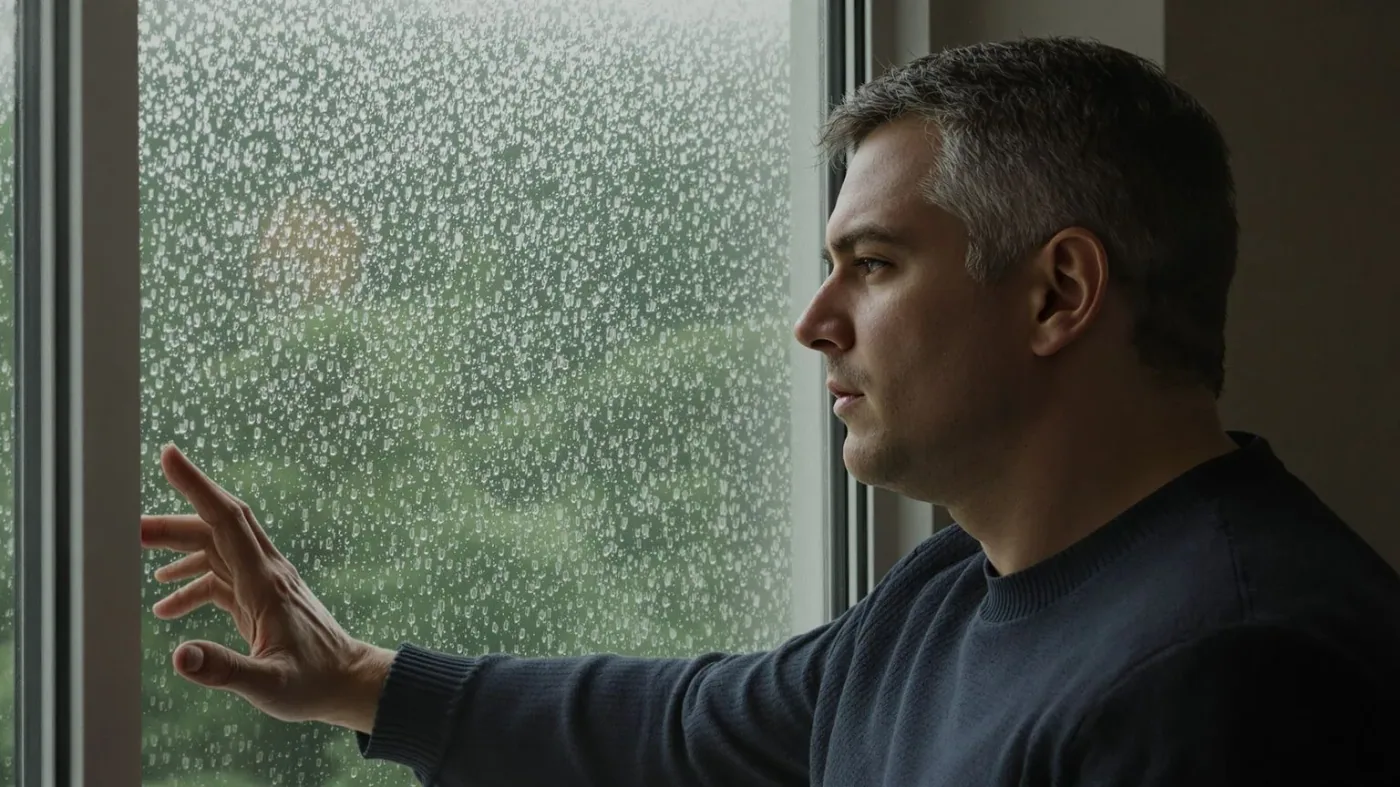
There is a difference between feeling an emotion and becoming consumed by it.
Yoga for emotional release works best when you strengthen the observer: the calm part of you that can notice, “Sadness is here,” without adding, “I am ruined.” Observer depth is not detachment. It is steady presence.
A clear sentence you can use: “This is in me, but it is not all of me.”
That line helps you hold two truths at once: the feeling is real, and you are larger than the feeling.
You can train this observer stance during practice with short check-ins:
- “Where is the sensation now?”
- “Is intensity rising, steady, or dropping?”
- “Can I stay with this for ten more seconds?”
Ten seconds sounds small, but small intervals build capacity. Capacity is what allows deeper release later.
Use this guide for intensity so you stay in workable range:
- 0–3/10: You may be too far from sensation. Narrow attention to one body spot.
- 4–6/10: Usually the most useful zone. Stay here and observe.
- 7+/10: Back off gently. Open your eyes. Look around the room. Feel your palms pressing down. Confirm where you are.
Backing off is not failure. It is skill. The body learns safety when you respect limits.
If you tend to over-carry other people’s pain, observer depth is even more important. Emotional overload often comes from blending everything together: your grief, their frustration, old fear, present stress. A short after-practice reflection can separate those threads. You can write: “What is mine?” “What is not mine?” That one minute can reduce hours of mental spinning.
If asking for help feels hard when emotion gets big, keep this guide on asking for support when it feels impossible nearby. Self-practice and human support can work together.
Observer depth also protects against a common trap: interpreting every sensation as emergency. Tight chest does not always mean danger. Heavy stomach does not always mean collapse. Sometimes it means your body is finally telling the truth you postponed. Truth can feel intense without being unsafe.
When this lands, your relationship to emotion changes:
You stop bracing against every wave.
You stop judging every tear.
You stop demanding instant relief.
And in that less-defended space, release becomes possible.
A 12-minute yoga for emotional release mini-session (tonight)

This is not a class. This is a container.
One body. One sensation. One honest shift.
1) Permission (30 seconds)
Before you lie down, say this quietly:
“Nothing has to happen for this to count.”
That line matters. It removes performance before you begin.
2) Entry (90 seconds)
Lie down on a mat, carpet, or firm bed.
- Hands by your hips, palms facing down
- Eyes closed or gently covered
- Legs natural
- Body still
If you want to fidget, just notice it. Then choose stillness again.
3) Body location (2 minutes)
Pick one place only: throat, chest, stomach, jaw, shoulders, or hands.
Name what is there in physical words, not story words:
“tight,” “hollow,” “heavy,” “buzzing,” “numb,” “hot.”
Keep returning to sensation, not explanation.
4) Tolerance (4 minutes)
Stay with that one area and let the intensity be what it is.
Use this range:
- 0–3/10: too distant, gently deepen attention
- 4–6/10: workable, stay here
- 7+/10: too much, open eyes, look around room, feel palms on ground
No forcing up. No shutting down. Stay inside what your system can hold.
5) One quiet truth (2 minutes)
Silently repeat one line on each exhale:
“This feeling is allowed here.”
If tears come, let them.
If anger comes, let it have heat without action.
If numbness comes, stay with the edges of numbness.
6) Integration (2 minutes)
Keep your body still.
Ask: “What shifted by 5%?”
Maybe breath deepened.
Maybe chest pressure softened.
Maybe sadness became clearer.
Maybe nothing obvious changed, but you stayed.
That also counts. Staying is progress.
If you want guided prompts after this session, use them while the body is still open and honest.
Feeling.app.
What just changed (and what usually softens next)

When you complete a session like this, the biggest shift is not “we fixed everything.”
The biggest shift is: **your body just learned that feeling is survivable.**
What changed:
- You stayed present instead of abandoning yourself.
- You gave one sensation clear, non-judging attention.
- You replaced force with contact.
What softens next is often shame first, then urgency. Not all at once. But enough to breathe. Enough to stop treating your inner world like an emergency.
What remains true is this: you do not need to flood yourself to heal. You need repeatable contact with what is real, at a pace your body trusts.
Tonight, take one clear next step: do the 12-minute session once, then write one line before sleep:
“What shifted by 5%?”
That line turns vague hope into evidence you can feel, and evidence is how confidence returns.
What often changes first is not the whole story, but the amount of force inside it. When yoga for emotional release is named honestly, your body usually stops wasting so much energy on hiding, bracing, and pretending to be fine. That is where clarity begins. You may notice a little less pressure in your chest, a little more room in your breathing, or a little less panic around what this means about you. Those are not small things. They are signs that truth is starting to replace performance. And when truth returns, you can choose what actually restores you instead of repeating what only keeps you depleted.
Carry this sentence with you after you close this page: your emotions are not the problem. Being left alone with them is.
That is why this practice works when force does not. You are giving your body what it has been asking for: honest attention, steady pacing, and a safe place to feel what is already here. Not all at once. Not perfectly. Just truthfully. This is how yoga for emotional release becomes real life change: one protected moment at a time, until your body no longer has to hide from your own experience.
You do not have to fight yoga for emotional release by force, but you can meet it with honesty, gentleness, and one true next step.
Frequently Asked Questions
Why do we feel emotional during yoga when we came to relax?
Because relaxation lowers armor. When bracing drops, held emotion can surface. That response is common and often healthy. It means your system sensed enough safety to stop gripping.
Is crying during yoga a sign we’re doing it wrong?
No. Crying can be a normal release response. It often signals a shift from holding to allowing. Let it be simple. You don’t need to explain it or perform it.
What if we feel nothing during emotional release practice?
“Nothing” is often protection, not failure. Numbness is a valid state. Stay consistent with short, gentle sessions and body-specific language. Sensation usually returns in layers.
Can men benefit from yoga for emotional release, or is this mostly for women?
Men can benefit deeply. Many men were taught early to suppress vulnerable emotions. Body-based practice helps rebuild range and honesty without needing to perform emotional language first.
How often should we practice yoga for emotional release?
Start with 3–5 sessions per week, 10–15 minutes each. Frequency beats intensity. Repetition teaches safety, and safety is what allows deeper release over time.
How do we know if we need support beyond self-practice?
If intensity feels unmanageable, daily functioning drops, or you feel unsafe with what is surfacing, reach out to a qualified mental health professional. Self-practice helps, and steady human support can be the safest next step.