
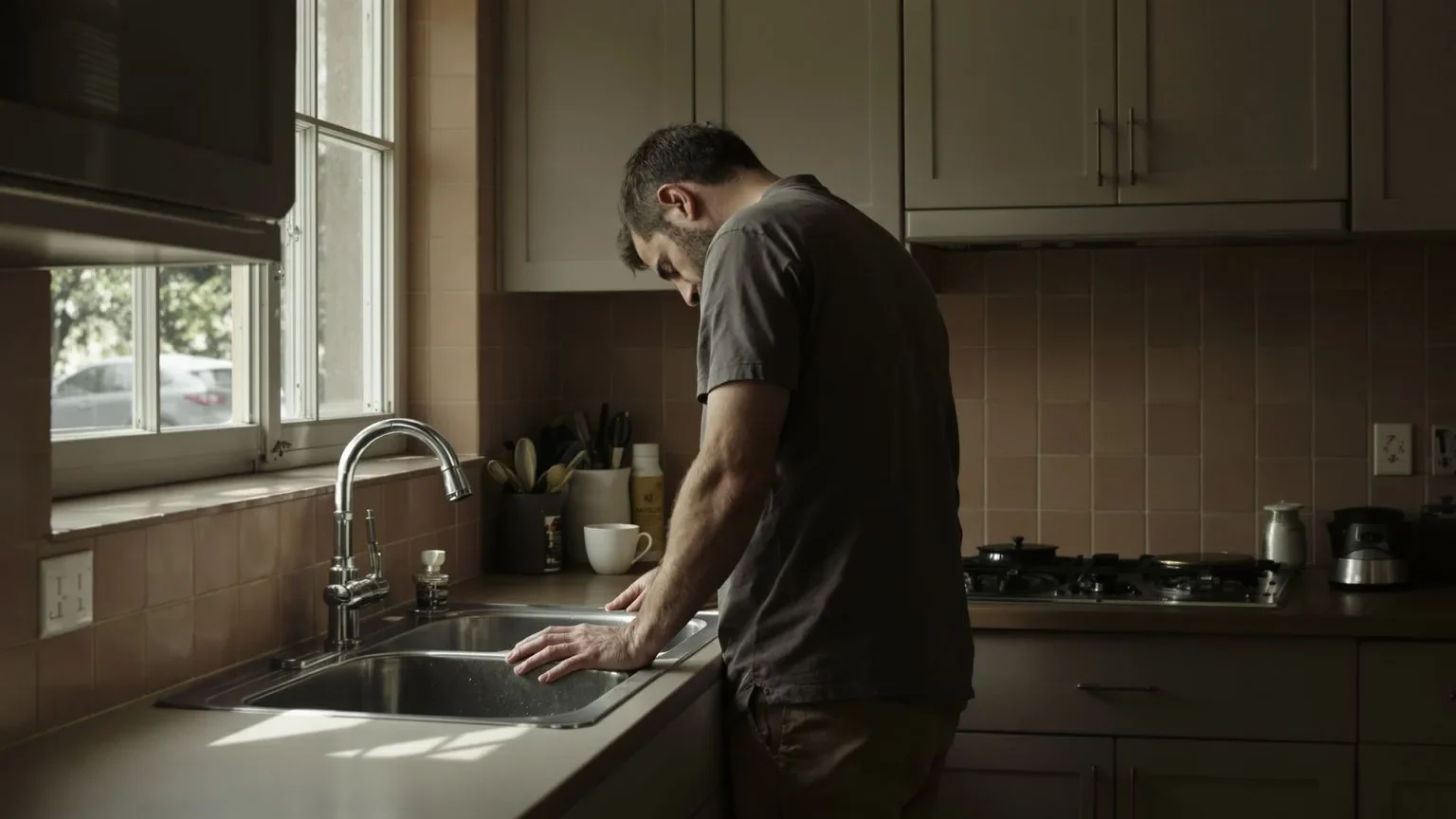
You did the responsible things. You slept more. You canceled plans. You tried to “take care of yourself.”
And still, your chest stays tight, your jaw stays clenched, and your body feels like it never got the message that the emergency is over.
Nervous System Burnout Recovery is not proof something is wrong with you, but a sign your body and inner life have been carrying too much alone.
Maybe you wake up tired before the day starts. Maybe you answer one message and feel your stomach drop. Maybe everyone around you thinks you are coping while you are holding back tears in the bathroom, the car, or ten quiet minutes before bed.
Nervous System Burnout Recovery is not proof something is wrong with you, but a sign your body and inner life have been carrying too much alone.
You do not recover by overriding yourself.
That is why nervous system burnout recovery often feels confusing at first: the old strategy that kept life running is the exact strategy that keeps your body in alarm.
By the end of this page, you will know exactly what to do tonight, what to change tomorrow, and how to tell if recovery is finally moving.
If you searched for nervous system burnout recovery, you are not weak and you are not late. You are trying to find one answer you can trust in a sea of noise. Push harder. Rest harder. Think better. Supplement better. None of that helps if the real issue is missed.
Here is the turn most people need: recovery stalls when we treat burnout like a productivity failure instead of a safety failure. Your mind can keep saying “we’re fine.” Your throat, sternum, stomach, and shoulders tell the truth anyway. Once we follow those signals directly, the path gets simpler, kinder, and actually doable.
If you want the bigger full picture first, start with our complete guide to emotional exhaustion and burnout, then return here for the body-first layer.
Why nervous system burnout recovery stalls (even when you are trying)
Join our insider list
Get exclusive insights delivered to your inbox — plus a free guide when it drops.
The problem is often not effort. The problem is mismatch.
Most burnout advice assumes under-discipline, so it prescribes cleaner systems: routines, boundaries, sleep hygiene, mindset work. Some of this matters. But many people do all of it and still feel like they are running on fumes.
What gets missed is this: burnout is not only “too much to do.” It is also too much unprocessed alarm in the body. The body has been signaling for months, sometimes years. The mind overrides those signals to keep life moving. Eventually, that override becomes the symptom pattern: irritability, panic spikes, numbness, pain, shallow breathing, shutdown. This is where nervous system burnout recovery has to shift from ideas to direct body contact.
That is why you can be exhausted and still unable to relax.
Your system learned that slowing down is unsafe.
When this runs long enough, many people swing between overdrive and collapse. One day urgent and wired. Next day foggy and flat. Different surface, same overloaded survival circuitry.
Threat does not always mean immediate danger. Sometimes it means:
If we let go, everything falls apart.. If we show struggle, we become a burden.. If we stop performing, we lose belonging.. If we feel this fully, we won’t come back..
Those are survival equations, not personality flaws.
Large institutions describe the same underlying dynamic from different angles: chronic unmanaged stress alters concentration, mood stability, sleep quality, pain sensitivity, digestion, and emotional range over time. The World Health Organization classifies burnout as an occupational phenomenon linked to chronic workplace stress not successfully managed. The American Psychological Association and the National Institute of Mental Health both describe stress as a whole-system load, not “just mental” and not “just physical.”
So yes, practical life changes matter. But nervous system burnout recovery becomes real when body signals are treated as information, not inconvenience.
The trap that keeps recovery shallow

Many people begin recovery with one hidden demand:
**“Get me back to normal fast.”**
That demand creates a loop. You crash, rest just enough to function, re-enter the same pressure pattern, then crash again. Each cycle adds more self-blame.
The quieter truth is harder and more useful: function can return before safety returns.
You can perform while still bracing.
You cannot heal while still bracing.
This is also why early recovery can feel worse before it feels better. When performance drops, stored material rises: tears, anger, grief, fear, emptiness, heavy fatigue. It can feel like backsliding. Often, it is your system finally completing interrupted stress cycles.
Your body is not sabotaging recovery.
Your body is refusing another season of being unheard.
Where anxiety and depression overlap
Burnout can overlap with anxiety and depression in non-trivial ways: sleep disruption, vigilance, numbness, hopelessness, low drive, social withdrawal, racing thoughts, and emotional distance. You do not need a perfect label to begin care. You do need honest tracking and timely support.
If panic, severe numbness, persistent anxiety, or depression are intensifying, involve a licensed clinician early instead of waiting for a full crash.
If nervous system burnout recovery still feels heavy in your body right now, Feeling.app is a calmer way to stay with what you feel.
A calmer, steadier way to meet what you feel — without bypassing, forcing, or performing recovery.
The body map of running on empty

When your head says “I’m fine” and your body says “I can’t keep doing this,” that internal split is exhausting. These signals are not random.
Throat: what never felt safe to say
Tightness, frequent swallowing, voice fatigue, going blank mid-conversation, saying “it’s okay” while the body contracts. This is common in caregiver fatigue patterns: everyone gets your steadiness; your truth gets postponed.
Chest and sternum: pressure and invisible grief
A stone on the chest. Shallow breath. That late-night “I’m suffocating” feeling with no clean explanation yet. Sensation often arrives before story.
If chest pressure is new, severe, or persistent, get medical evaluation first. Body-first work supports medical care; it does not replace it.
Shoulders and upper back: chronic carrying
Pre-managing conflict. Absorbing everyone’s emotional weather. Solving before being asked. Staying composed in rooms that cost you. Over time this becomes neck pain, headaches, jaw tension, and constant bracing.
Jaw: the held-back no
Clenching often tracks with suppressed refusal. Smiling outside, pressure inside. That split drains more than most people realize.
Stomach and gut: alarm without words
Knots, nausea, reflux flares, appetite swings, and the wired-stomach feeling under cumulative stress load.
The body keeps a ledger.
Every swallowed feeling. Every overruled limit. Every unspoken no.
In nervous system burnout recovery, this is the turning point: you stop arguing with the signal and start witnessing it directly.
For a related layer, read feeling emotionally numb.
What keeps you in emergency mode

The painful question is usually: “If we see the pattern, why can’t we stop?”
Because insight is not the same as safety.
Without safety, protection wins.
Burnout is usually built through micro-overrides, not one dramatic event. You ignore hunger to finish one more task. You stay in draining conversations because leaving feels rude. You answer late messages when your body needs stillness. You say yes while your stomach says no. Each moment looks small. The accumulation is not.
Many people also outsource safety to performance:
If we are needed, we are safe.
If we are exceptional, we are safe.
If we never disappoint, we are safe.
That can produce high function and deep self-abandonment at the same time.
Another trap is trying to think your way out of a body state. Analysis helps with meaning. It rarely helps with downshifting. Recovery needs repeated, felt experiences of non-threat so parasympathetic repair can come back online.
One more trap is advice without witnessing. When overloaded, instant solutions can feel like erasure. Being met comes before being corrected. That is especially true in nervous system burnout recovery, where the observer state is built through staying with sensation, not debating it.
Blurred boundaries are another trap. Real boundaries are observable and behavioral:
No work messages after a set hour.. One protected meal without multitasking.. One evening each week without caretaking labor.. One clean no without over-explaining..
If this section hits, read why you always say “I’m fine” when you’re not.
A 12-minute nervous system burnout recovery practice for tonight

You asked for one clear step.
This is one clear step.
1) Permission (20 seconds)
You do not need to feel calm to begin.
You only need to stop abandoning what you feel.
2) Entry (1 minute)
Lie down on a bed, mat, or floor.
Hands beside your hips, palms down.
Eyes closed or covered with a T-shirt or scarf.
Body still.
Stillness matters. We are sending one message: nothing to prove, nothing to perform.
3) Body location (30 seconds)
Pick one signal only: throat tightness, chest pressure, jaw tension, stomach knot, shoulder weight, buzzing skin, hollow sternum.
Do not chase the whole body. Choose one place.
4) Tolerance (9 minutes)
Stay with that one area.
- Do not explain it.
- Do not fix it.
- Do not force breath.
- Do not move your body.
When thoughts pull you into story, return to raw sensation: pressure, heat, pulse, ache, contraction, trembling, emptiness.
If intensity spikes, narrow to a one-inch zone. Smaller focus often increases tolerance.
5) One quiet truth (30 seconds)
Silently repeat:
“This is what is here. We can stay.”
Not forever. Just now.
6) Integration (1 minute)
Before getting up, notice a 5% shift:
- Did pressure move?
- Did breath change by itself?
- Did jaw or shoulders soften even slightly?
- Did urgency drop by one notch?
Any small change counts. Small is how trust begins.
If twelve minutes is too much, do six.
Consistency beats intensity.
Try this 4–5 times a week for two weeks and track one thing: how early you notice body signals before overload peaks.
For a companion read, go to how to stop hiding your feelings.
If you want a gentler way to continue after this article, Feeling.app is worth trying.
A calmer, steadier way to meet what you feel — without bypassing, forcing, or performing recovery.
What changes when this starts working
What changed first is clarity. You stop asking, “What is wrong with me?” and start asking, “What is my body saying right now?” That question reduces shame because it gives you a path.
What softens next is friction. You catch overload earlier. You need less collapse to justify rest. Your no arrives faster and with less guilt. Hard days still happen, but they stop becoming full-body emergencies.
What remains true is that life is still life. Stress does not disappear. Other people do not instantly become easier. But your relationship to stress changes: less self-abandonment, less panic about your own signals, more trust that you can meet what rises without disappearing yourself. This is the lived center of nervous system burnout recovery.
For people in caregiver fatigue loops, this is crucial. Listening to your body does not make you less reliable. It makes your care sustainable.
If this is your pattern, read caregiver fatigue and emotional depletion.
When therapy is the next right step
If symptoms are persistent, severe, or linked to trauma history, therapy can be a central part of recovery. Approaches like EMDR and Somatic Experiencing are commonly used when high alert persists after stressors have passed. Skilled clinical support can help separate current load from older survival patterns still active in the background.
When to seek medical support now
Seek prompt medical care for:
new, severe, or worsening chest pain/pressure or shortness of breath. fainting, major dizziness, or neurological symptoms. sustained insomnia with major functional decline. persistent hopelessness or thoughts of self-harm.
Medical care and nervous system support are not competing paths. They work better together.
The next step, clearly

If rest has failed, the answer is rarely “try harder.”
The answer is usually “become safer to yourself, repeatedly, specifically.”
Tonight, do one round.
Hands by hips, palms down. Eyes closed or covered. Body still.
Twelve minutes with one sensation.
Then choose one boundary for tomorrow that protects what you noticed.
Recovery becomes believable the moment your body learns this new rule: we will not override you to stay lovable.
What often changes first is not the whole story, but the amount of force inside it. When nervous system burnout recovery is named honestly, your body usually stops wasting so much energy on hiding, bracing, and pretending to be fine. That is where clarity begins. You may notice a little less pressure in your chest, a little more room in your breathing, or a little less panic around what this means about you. Those are not small things. They are signs that truth is starting to replace performance. You do not recover by overriding yourself. You recover when your body trusts that your truth will not be punished, rushed, or erased.
You do not have to fight nervous system burnout recovery by force, but you can meet it with honesty, gentleness, and one true next step.
Frequently Asked Questions
Why do I still feel burned out after taking time off?
Time off can restore energy without restoring safety. If your system still expects pressure, over-functioning, or self-erasure when normal life resumes, symptoms return quickly. Recovery deepens when rest is paired with body-based practice and actual boundary change.
How do I know if this is nervous system burnout or just a stressful season?
A stressful season usually improves when demand drops. Nervous system burnout tends to persist through short breaks, often with ongoing tension, sleep disruption, irritability, numbness, or wired-and-tired cycles. Persistence with low recovery capacity is the key signal.
Why can’t I relax even when I’m exhausted?
Because exhaustion and safety are different states. You can be physically depleted while your body still reads threat. Passive rest may not land until your system experiences non-interference and direct body contact.
What actually helps with burnout recovery when generic advice doesn’t?
Specificity and repetition. Reduce daily micro-overrides, practice one reliable body-safety protocol, and set boundaries before collapse. One grounded method done consistently is more effective than collecting tips you cannot sustain.
How long does nervous system burnout recovery take?
It varies by load, support, medical factors, and whether old demand patterns remain active. Many people notice early shifts in awareness and reactivity within weeks of consistent practice. A better metric than “never stressed” is “faster recognition and gentler recovery.”
Is it normal to feel more emotions when I start recovering?
Yes. When performance pressure drops, suppressed emotion often surfaces. That can feel intense, but it is commonly part of repair. The aim is not flooding. The aim is staying present with manageable amounts so your body no longer has to shout to be heard.