

If you searched emotional release technique, you’re probably not looking for theory. You want clear steps you can trust when your chest is tight, your jaw is locked, and your mind keeps replaying the same scene. By the end of this page, you’ll know exactly what to do in that moment, and what usually softens first.
You might already understand your patterns. You might know where they came from. And still, your body feels like it never got the memo.
That does not mean you are failing. It means your system is protecting you the best way it learned.
Most people who feel stuck are not missing effort. They are missing a method their nervous system can actually tolerate. If you’ve been suppressing emotions, the issue is rarely that your feelings are too much. More often, your feelings were never given a safe path to move. The shift is practical: stop fighting the feeling, and start giving it a route through your body.
If you want the broader framework, start with our complete Permission to Feel guide. This page gives you one grounded technique you can use today.
When nothing changes, it is usually a method problem, not a character flaw
Join our insider list
Get exclusive insights delivered to your inbox — plus a free guide when it drops.

Many people arrive here after trying everything they were told would help. Journaling. Reflection. Naming triggers. Repeating *its okay to not be okay*. Talking themselves through it. Staying “positive.” Then comes the private fear: “If I’ve done all this and I’m still stuck, maybe something is wrong with me.”
Nothing is wrong with you.
The mismatch is simple: your mind can understand safety before your body believes it. So your thoughts say, “I’m okay now,” while your throat closes when you try to speak. Your shoulders rise before conflict. Your stomach turns when you need to set a boundary. That is not weakness. That is learned protection.
When you spend years bottling up feelings, your system learns one rule: don’t show this. That rule can look like numbness, people-pleasing, irritability, overexplaining, shutdown, or emotional flooding after long control. Different patterns. Same engine.
That is why people can feel afraid to show emotions, even with people who care. You are not choosing to hide in that moment. Your body is predicting cost from older experience.
Most advice ends at “feel your feelings.” Without structure, that turns into pressure. You do not need more pressure. You need a doorway small enough for your system to walk through. A good emotional release technique does exactly that: it lowers the threshold so truth can come forward without overwhelming you.
Your body is not overreacting. It is reporting unfinished experience.

Blocked emotion does not vanish. It gets rerouted into tension, overthinking, distraction, overwork, scrolling, and emotional flatness. From the outside, this can look functional. Inside, it can feel like living with a silent alarm.
Major health sources have linked chronic stress and suppression with real physical strain, including disrupted sleep and higher stress load (see the APA and CDC). This does not mean every symptom is emotional, and medical care still matters. It means your body and emotional life are deeply connected.
A practical body map helps:
Throat: what you swallowed to keep peace. Chest: grief, loneliness, longing, love with nowhere to go. Stomach: fear, betrayal, dread. Shoulders: responsibility you carried to stay needed. Jaw: anger held back to stay acceptable.
If this feels familiar, your system is not broken. It is readable. And when you use an emotional release technique regularly, this body map becomes less abstract and more personal: you start noticing where each pattern lands before it takes over your whole day.
If this feels hard to hold by yourself right now, Feeling.app offers a calmer, steadier way to meet what you feel without forcing recovery.
A grounded emotional release technique you can do today

This is a short, body-first session. Not a performance. Not forced catharsis. Not retelling your whole story.
Permission (30 seconds)
Before you begin, say this quietly:
“I am not here to fix myself. I am here to tell the truth about what I feel.”
That line changes your stance from control to contact.
Entry (2 minutes)
Lie on your back in a place where you won’t be interrupted for 10–15 minutes.
Place your hands beside your hips, palms facing down.
Close your eyes, or cover them lightly.
Keep your body still.
No special breathing pattern.
No movement.
No pressure to “do it right.”
Stillness gives your nervous system one clear message: this moment is safe enough to feel.
Body location + tolerance (4 minutes)
- Find the strongest sensation right now: tightness, pressure, heat, ache, hollowness, or numb heaviness.
- Place attention there. Stay with sensation, not explanation.
- Rate intensity from 0–10. If it is above 7, move to the edge of the sensation instead of the center.
- Stay for four minutes, returning to the body location each time your mind leaves.
The goal is not intensity. The goal is tolerable contact.
One quiet truth (1 minute)
Say one true line, softly:
“This hurts.”. “I feel scared.”. “I feel angry.”. “I feel alone.”. “I feel nothing, and that nothing feels heavy.”.
One true line is enough.
Integration (1 minute)
Ask:
“What do I need most right now: space, tears, truth, rest, or a boundary?”
Write one line in your notes app before you stand up:
“What I felt in my body was ___, and what I needed was ___.”
That line teaches your system that your experience can be witnessed and remembered, not swallowed and erased.
Body awareness layer: what to notice before words appear
Many people miss the first signal because they are waiting for emotion to become obvious. Usually it starts smaller. A jaw that presses. A swallow that does not complete. A band of pressure right under the sternum. A sudden urge to check your phone, clean something, explain yourself, or leave the room. Those are body signals, not personality flaws.
This is where emotional expression becomes practical. During this emotional release technique, ask three plain questions while staying still:
Where is the sensation?
What is its shape or texture?
Is it changing, even slightly?
You are not trying to produce a breakthrough. You are teaching your system that contact is allowed. At first, you may get only one clear data point: “hard knot in chest” or “numb block in throat.” That is enough. Repeat tomorrow. The emotional release technique works through repetition, not intensity.
We have found that this layer matters most for people who say, “I don’t know what I feel.” Usually you do know, but in body language first. Tight. Heavy. Hollow. Pressed. Buzzing. Numb. Start there. Words can come later. If they never come in that session, the session still counts.
Observer layer: staying present without collapsing into the feeling
There is a difference between feeling and drowning. This is the depth layer many people were never taught. You can stay close to a sensation without becoming the sensation. You can witness grief in your chest without telling yourself your whole life is ruined. You can feel anger in your jaw without turning it against yourself or someone else.
In this emotional release technique, the observer is simple: “Something is happening in me, and I can stay with it for this minute.” That sentence protects against two common traps: overcontrol and overwhelm. Overcontrol says, “Nothing is happening, move on.” Overwhelm says, “This is everything, I can’t handle it.” The observer says, “This is here now, and I can be with it in small doses.”
If four minutes is too long, reduce to ninety seconds and repeat later. If the center feels too intense, stay at the edge. If words trigger a shutdown, skip language and track sensation only. The emotional release technique remains effective when you scale it honestly. Your job is not to push. Your job is to stay.
If this feels hard, scale it — don’t quit it

If the session feels like too much, reduce dose:
3 minutes instead of 10. edge of sensation instead of center. one sentence instead of many. once today, not five times.
People often think “nothing happened,” when something subtle actually shifted: one deeper breath, softer shoulders, less jaw clenching, fewer rehearsed arguments in the mind. Quiet movement is still movement.
If you often say “I’m fine” when you’re not, expect this to feel unfamiliar at first. You are not failing when it feels awkward. You are interrupting a survival habit.
Use this line in hard moments:
“When my body says I’m not okay, I stop arguing and start listening.”
A practical way to keep going is to set one tiny standard: show up without performance. That means no grading your session, no hunting for dramatic change, no telling yourself you did it wrong because you cried or because you felt nothing. If you stayed still, kept your palms down, and returned attention to one body location, you did the work.
When the mind tries to turn this into analysis, return to contact. “Where is it now?” is enough. If you catch yourself writing long explanations, pause and write three body words instead. Heavy chest. Tight throat. Hot face. This keeps your emotional release technique grounded in the body rather than trapped in mental loops.
What changes after you practice this honestly

At first, the shift is rarely dramatic. It is practical.
You notice your sequence sooner: throat tightens, chest hardens, thoughts speed up. That early awareness creates a choice point before shutdown or explosion. You respond to your limits faster, so less pressure accumulates.
You may also feel less split between what you show and what you carry. That split is exhausting. Every moment of honest contact reduces it.
If you feel emotionally numb, this method still applies. Numbness is often protection after overload. Respecting protection while rebuilding contact tends to work better than trying to blast through it.
If you want gentle structure for continued practice, Feeling.app can support you between heavy moments.
What usually changes next is your relationship to triggers. The event may still hurt, but recovery gets faster. You spend less time rehearsing old arguments in your head. You need less energy to look okay when you are not okay. You start noticing when your “fine” voice appears, and you catch it earlier.
With repetition, an emotional release technique can also change how boundaries feel in your body. Before, setting a limit may have felt like danger: racing heart, tight belly, dry mouth. After steady practice, that same moment may still feel uncomfortable, but not impossible. You can hold the discomfort without abandoning yourself. That is real progress.
Many people also notice cleaner communication. Not perfect communication. Cleaner. Fewer defensive speeches. Shorter truth. “I’m overloaded and need ten minutes.” “I’m hurt and I want to stay in this conversation.” “I can’t say yes to that.” This is emotional expression with less collapse and less attack. The body is less braced, so your words carry less force and more clarity.
There is also a deeper shift underneath symptoms: shame loses speed. When you stop treating your inner state as a problem to hide, shame has less fuel. You still feel pain, but you no longer add a second wound on top of it by calling yourself weak, dramatic, or broken. This is where an emotional release technique becomes more than a tool. It becomes a new way of relating to yourself.
Your next 24 hours: one clear step
Choose one moment today when you usually suppress: after a tense message, before bed, after a hard meeting, or right before you say “fine.”
Run this technique once. Then write the integration line.
Tomorrow, do it again at roughly the same time.
Track one thing only: Did I tell the truth about what I felt in my body?
If you want to make this easier, choose your time now and remove friction. Put a scarf near where you lie down. Silence notifications. Open your notes app before you begin. Keep the commitment tiny and clear: one honest round, no performance.
If you miss a day, restart the next day without punishment. The habit is built by returning, not by being perfect. The more consistent your rhythm, the faster your system learns that feeling is no longer dangerous.
What changed, what softened, what remains true
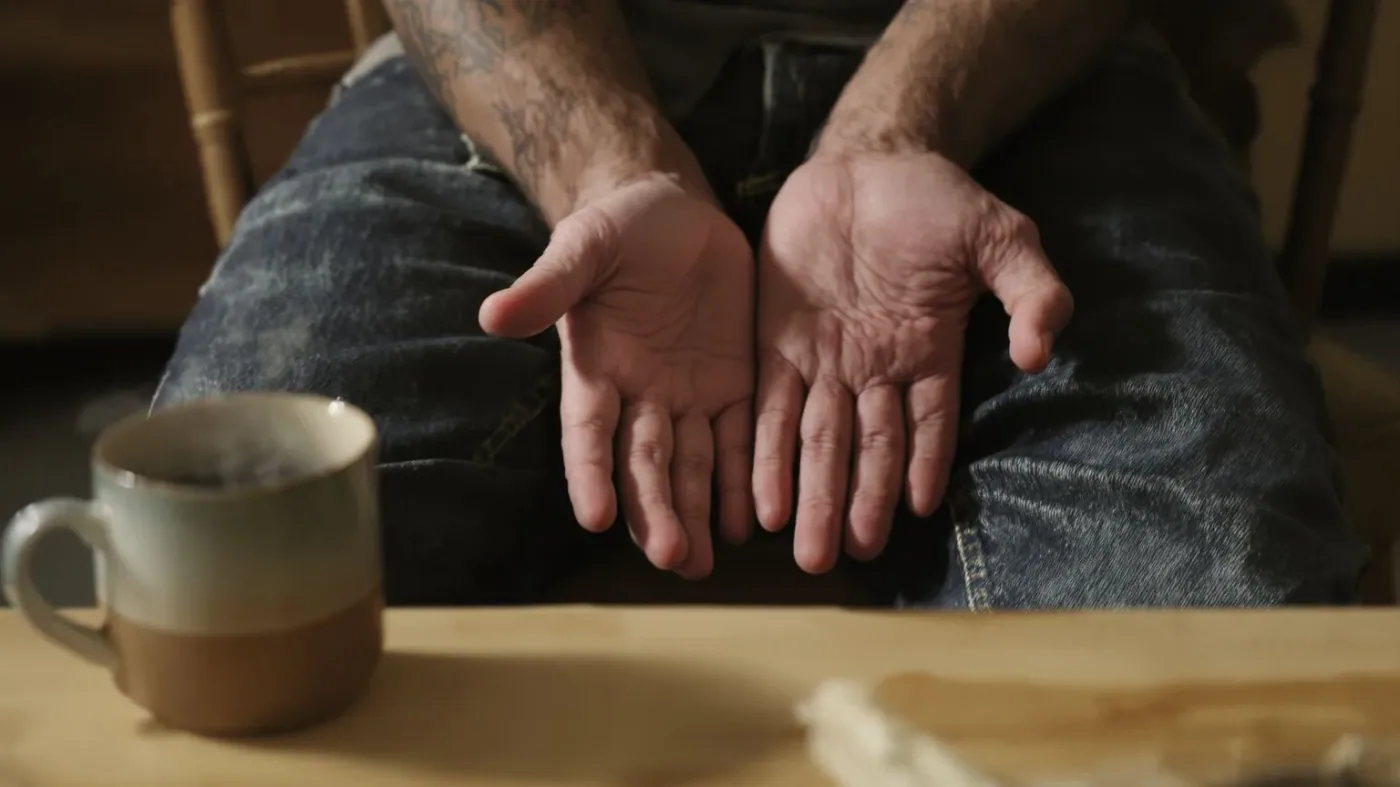
After one honest round, what changes is usually awareness. You catch the pattern earlier and stop getting blindsided by it.
What softens is usually physical first: a little more breath, less jaw pressure, less urgency to explain yourself, less internal noise.
What remains true is this: the feeling may not disappear in one session, and that is not failure. The win is that you stayed with yourself instead of abandoning yourself. Repeated contact turns that into stability.
Relief often begins there—not in a dramatic breakthrough, but in the moment you stop leaving yourself to stay acceptable.
What often changes first is not the whole story, but the amount of force inside it. When emotional release technique is named honestly, your body usually stops wasting so much energy on hiding, bracing, and pretending to be fine. That is where clarity begins. You may notice a little less pressure in your chest, a little more room in your breathing, or a little less panic around what this means about you. Those are not small things. They are signs that truth is starting to replace performance. And when truth returns, you can choose what actually restores you instead of repeating what only keeps you depleted.
You do not have to fight emotional release technique by force, but you can meet it with honesty, gentleness, and one true next step.
The deeper truth is simple and hard at the same time: most of us were taught to be acceptable before we were taught to be honest. So we learned to edit ourselves in real time. We swallow words. We harden our face. We smile while our stomach twists. Then we wonder why we feel far away from ourselves.
A consistent emotional release technique interrupts that pattern at the body level. It gives you a repeatable way to stop the split between the outside performance and the inside reality. Not by making pain disappear on command, but by ending the habit of leaving yourself when pain appears.
When this becomes familiar, the room inside you changes. There is less panic around feeling. Less urgency to explain. More capacity to stay. That is what safety starts to feel like in lived terms: you can tell the truth in your own body and remain with yourself while it moves.
If all you take from this page is one thing, take this: your feelings are not asking to be fixed. They are asking to be felt with enough steadiness that they can finally complete what was interrupted. That is the work. That is the release. And yes, it is enough.
Frequently Asked Questions
Why do I still feel this when I already understand my patterns?
Because understanding and release are different processes. Insight can happen quickly in thought. Emotional completion usually requires body-level safety and repetition. You are not behind. You are working at the right depth.
Can an emotional release technique reduce physical tension?
Often, yes—especially stress-linked tension in the jaw, chest, shoulders, and stomach. It does not replace medical care, but many people notice meaningful relief when they stop suppressing and begin direct emotional contact.
What if I’m afraid to show emotions because people judged me before?
That fear makes sense. Start privately. Build internal safety with short sessions first. Then share with one person who can witness without fixing. Trust tends to return through repeated safe experiences, not pressure.
Is numbness normal when I try this?
Yes. Numbness is a common protective response after long emotional overload. Treat numbness as a real sensation, not a mistake. Gentle, repeated contact usually works better than force.
How often should I practice this technique?
Daily is ideal, even for 6–10 minutes. Consistency matters more than duration. A small honest practice repeated over time usually creates more stable change than occasional intense sessions.
How do I know it’s working?
Look for subtle markers: less clenching, easier breathing, fewer emotional spikes, clearer boundaries, less exhaustion from pretending, and quicker recovery after hard moments. The strongest sign is often this: you no longer leave yourself when things get hard.