

If you searched i can't stop the loneliness, you are probably in it right now, not reading this from some calm place. Maybe it is late. Maybe your body is tired but your mind will not settle. You might keep picking up your phone and putting it back down, wanting someone to reach for and also not wanting to feel like a burden. You may be stuck between two bad options: force conversation when you feel raw, or disappear and feel even more alone.
You are not being dramatic. You are likely exhausted from trying advice that sounds right but never reaches the place that hurts. Maybe you are opening and closing the same apps, typing a message and deleting it, or staring at the ceiling while your chest feels heavy and your mind keeps asking what is wrong with you. You may be around people all day and still feel that private pressure behind your sternum at night. You may be answering texts while feeling invisible. You may keep repeating i can't stop the loneliness and feel ashamed that this is still where you are.
If you are confused about what to do with this feeling tonight, that confusion makes sense. Deep loneliness is often not a shortage of people at the core. It is a safety shortage. When your body does not feel safe enough to be honest, you can be surrounded and still feel alone. So we will stay practical: what is happening, what to try tonight, and one action you can take that creates real movement.
If you want the broader map, start with our complete guide to loneliness and belonging, then come back here for this exact pattern.
You are not too much. You adapted to rooms that were too small for your truth.
You’re not broken — your system is protecting you
Join our insider list
Get exclusive insights delivered to your inbox — plus a free guide when it drops.

Most people ask: *How do I stop feeling alone?*
Beneath that is a harder concern: *Which answer can I trust when I already feel raw?*
That concern matters. Conflicting advice can make loneliness worse. One source says push yourself socially. Another says stay inward. Another says think differently. Another says accept everything. When you are already braced, too many systems become more noise than help.
A clearer path is this: if your body is in protection mode, connection attempts often happen through performance. People meet the performance. You stay unseen. The ache stays.
This is why common tips can fail in the exact moment you need help. “Go out more” is not wrong. It is mistimed when your throat is tight, your jaw is locked, and your chest feels hollow.
The central truth is simple and usable:
Loneliness gets unbearable when self-abandonment becomes automatic.
Relief begins when your body learns you will not leave yourself in hard moments.
Long stretches of loneliness can affect sleep, stress load, mood, and overall health. The U.S. Surgeon General’s advisory on social disconnection describes this clearly (HHS advisory PDF), and the National Institute on Aging outlines similar risks and warning signs (NIA overview). If concentration, appetite, memory, energy, or sleep are shifting in concerning ways, involve a clinician you trust. That is care.
Why being with people can still feel empty

One of the sharpest forms of loneliness is visible on the outside and hidden on the inside. You are there. Your real self is not.
Then shame enters:
“I have people. Why do I still feel like this?”
That thought turns pain into self-blame. Self-blame makes hiding feel safer. Hiding deepens loneliness. The loop tightens.
Usually, your body is tracking emotional safety, not social quantity. If honesty feels costly, presence feels dangerous. If you cannot say what is true, connection feels like acting.
Notice the micro-signals. Someone asks, “How are you?” and your shoulders rise. Your throat narrows. Your jaw sets before you answer “fine.” That is not failure. That is history in the body.
Over time, distance gets built in ordinary moments: swallowing anger, minimizing hurt, turning need into competence, becoming easy to be around and hard to reach.
The mask was survival, not weakness. The injury is believing you still need it everywhere.
Some loneliness is also structural: grief, divorce, caregiving, illness, migration, remote work, mobility limits, language barriers. In those seasons, practical rebuilding matters. But even there, inner contact has to come before everything else. Without it, you can collect invitations and still feel like an outsider in your own life.
For related patterns, read:
- Why you always say “I’m fine” when you’re not
- How to feel safe with your emotions
- What to do when you feel disconnected from yourself
If i can't stop the loneliness still feels heavy tonight, keep it simple and stay with one honest next move.
If you want a quiet next step after this page, Feeling.app continues this same body-first approach at your pace.
When nights get hard, many people assume they are failing at connection. Usually the harder truth is that they are trying to connect while bracing. You might notice it as speed in your thoughts, or as a silent demand to say the perfect thing so nobody pulls away. In that state, even kind replies can feel thin. This is often the moment the mind says i can't stop the loneliness and starts collecting evidence.
Try naming what your night actually feels like before you explain why it is happening. The body gives cleaner data than the story does. Is your throat tight like you are holding back words? Is your chest heavy like a stone under the sternum? Is your stomach hollow, like you missed a step in the dark? These are not poetic details. They are real signals that you are in protection.
Protection often makes people do one of two things: over-reach or disappear. Over-reaching can look like sending long messages that ask for immediate rescue. Disappearing can look like watching stories, scrolling, and telling yourself you should be stronger. Both are understandable. Both can leave you feeling worse an hour later.
A steadier middle path is smaller and more honest. Keep contact simple. Keep language plain. Keep your expectations gentle. If the sentence in your head is i can't stop the loneliness, translate it into one true line another human can receive: “Heavy night. I don’t need fixing. I just don’t want to be alone in it.” One clear line usually lands better than a full history told from panic.
It also helps to reduce pressure before sleep. Lower bright screens. Drink water. Put both feet on the floor for ten slow breaths with no goal except feeling your weight. Then lie down and do the body contact below. You are not trying to become a different person tonight. You are showing your system that you will stay present when pain rises. That is how trust in yourself is rebuilt.
If you wake at 2 a.m. and the first thought is i can't stop the loneliness, do not argue with it. Arguing tends to tighten the body further. Name it, feel where it lands, and return to sensation. Repetition matters here. Not perfection. Each time you stay instead of abandoning yourself, the loop loses a little force.
The loop that keeps “i can't stop the loneliness” alive

A wave starts in the body: chest weight, throat pressure, tight jaw, hollow stomach.
The mind interprets: “Something is wrong with me.”
You escape: scrolling, overworking, overthinking, numbing, performing.
The wave returns, now carrying shame too.
Your system is not trying to ruin your life. It is trying to prevent overwhelm. But short-term escape often creates long-term disconnection.
So when the wave hits, stay with this:
- Do not force social exposure at peak intensity.
- Re-establish contact with your body.
- From that steadier state, choose one low-pressure human contact.
This sequence matters. It prevents the common crash where you reach out while flooded, get an imperfect response, and read it as proof you are unlovable.
Use one honest sentence, not a full life story:
- “Heavy night. Could we talk for ten minutes? No fixing needed.”
- “I feel alone tonight, even around people. Saying it helps.”
If no one responds right away, you are not back at zero. Staying with yourself is still forward movement.
A 12-minute reset for tonight (mini-session)

This is not about calming down on command. This is about not abandoning yourself. You do not need to explain your loneliness to deserve care. You only need to be willing to stay.
Lie down on a bed, sofa, or floor. Place your hands beside your hips, palms facing down. Close your eyes or cover them with a soft T-shirt or scarf. Choose one area that is loudest right now: throat, chest, stomach, jaw, shoulders, or hands.
Stay physically still for 12 minutes. No swaying. No rocking. No chasing relief with movement. If thoughts race, return to raw sensation words: tight, heavy, hollow, burning, numb, pressure.
At minute 12, write one line:
“Right now, what hurts is…”
Keep it plain. No analysis.
Then choose one tiny follow-through so your nervous system gets a new message:
- Send one honest sentence to one safe person, or
- Write yourself a morning note: “I stayed,” or
- Schedule one small social anchor in the next 24 hours.
If evenings keep getting heavy, repeat this rhythm weekly: one body check-in, one low-pressure contact, one self-contact ritual even on good days.
If you want support after reading, keep going gently with one clear tool.
If you decide you want extra structure tonight, Feeling.app gives you a calm, private way to continue from here.
What starts to change when this works
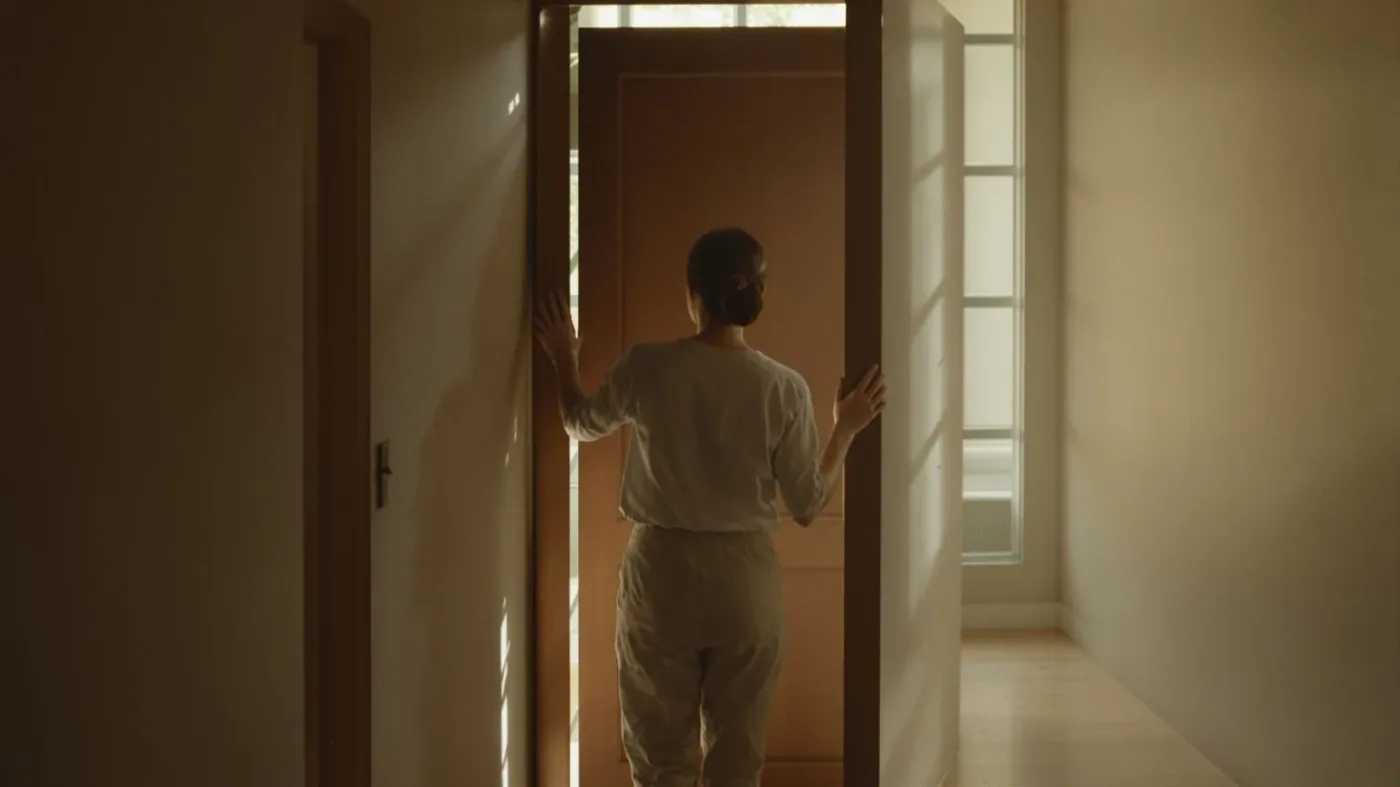
The night is no longer one solid wall. You have a clearer path when intensity rises. That clarity alone reduces panic.
The intensity still comes, but it does not own the whole evening. The wave feels less like a verdict and more like a signal. Shame starts losing its grip because you stop disappearing when pain appears.
You will still need people. You will still need honest contact. Structural loneliness may still require practical rebuilding over time. But now you are rebuilding from connection, not collapse.
You may also feel grief for the years spent performing “okay.” Let that grief count. It means numbness is giving way to contact.
For deeper support:
- How to stop hiding your feelings
- Safe ways to open up when vulnerability feels scary
- When loneliness turns into emotional numbness
Loneliness loses power the moment you stop leaving yourself.
What often changes at the beginning is not the whole story, but the amount of force inside it. When i can't stop the loneliness is named honestly, your body usually stops wasting so much energy on hiding, bracing, and pretending to be fine. That is where clarity begins. You may notice a little less pressure in your chest, a little more room in your breathing, or a little less panic around what this means about you. Those are not small things. They are signs that truth is starting to replace performance. And when truth returns, you can choose what actually restores you instead of repeating what only keeps you depleted.
You do not have to fight i can't stop the loneliness by force, but you can meet it with honesty, gentleness, and one true next move.
What often changes at the beginning is not the whole story, but the amount of force inside it. When i can't stop the loneliness is named honestly, your body usually stops wasting so much energy on hiding, bracing, and pretending to be fine. That is where clarity begins. You may notice a little less pressure in your chest, a little more room in your breathing, or a little less panic around what this means about you. Those are not small things. They are signs that truth is starting to replace performance. And when truth returns, you can choose what actually restores you instead of repeating what only keeps you depleted.
You do not have to fight i can't stop the loneliness by force, but you can meet it with honesty, gentleness, and one true next move.
Frequently Asked Questions
Why do I feel lonely even when I’m around people?
Because proximity is not the same as emotional contact. If you are physically present but hiding what is true, your body still reads disconnection. Being seen matters more than being surrounded.
Is “i can't stop the loneliness” a sign something is seriously wrong with me?
Usually no. It often signals prolonged disconnection, self-abandonment, or both. If loneliness includes thoughts of harming yourself, seek immediate local crisis support.
What should I do first when loneliness spikes at night?
Start with body contact before social decisions. Lie down, hands by your hips with palms down, eyes closed or covered, and stay with the strongest sensation for 12 minutes. Then send one honest, low-pressure message to one safe person.
How do I know if I need more people or more self-connection?
If social contact leaves you drained or unseen, begin with self-connection. If self-connection improves but your days still feel empty, add gentle social structure. Most people need both, with self-contact leading the way.
Why does opening up make me feel worse sometimes?
Because timing and safety matter. Sharing something tender with someone dismissive can intensify pain. Start with smaller truths and people who respond with steadiness, not fixing.
Can deep loneliness actually change, or do I just learn to live with it?
It can change, usually gradually. When you stop abandoning yourself and build safer, honest contact over time, intensity and frequency tend to soften. What feels permanent becomes workable, then lighter.